Katie Joy Duke’s Speech at Pink Ribbon Army 2026
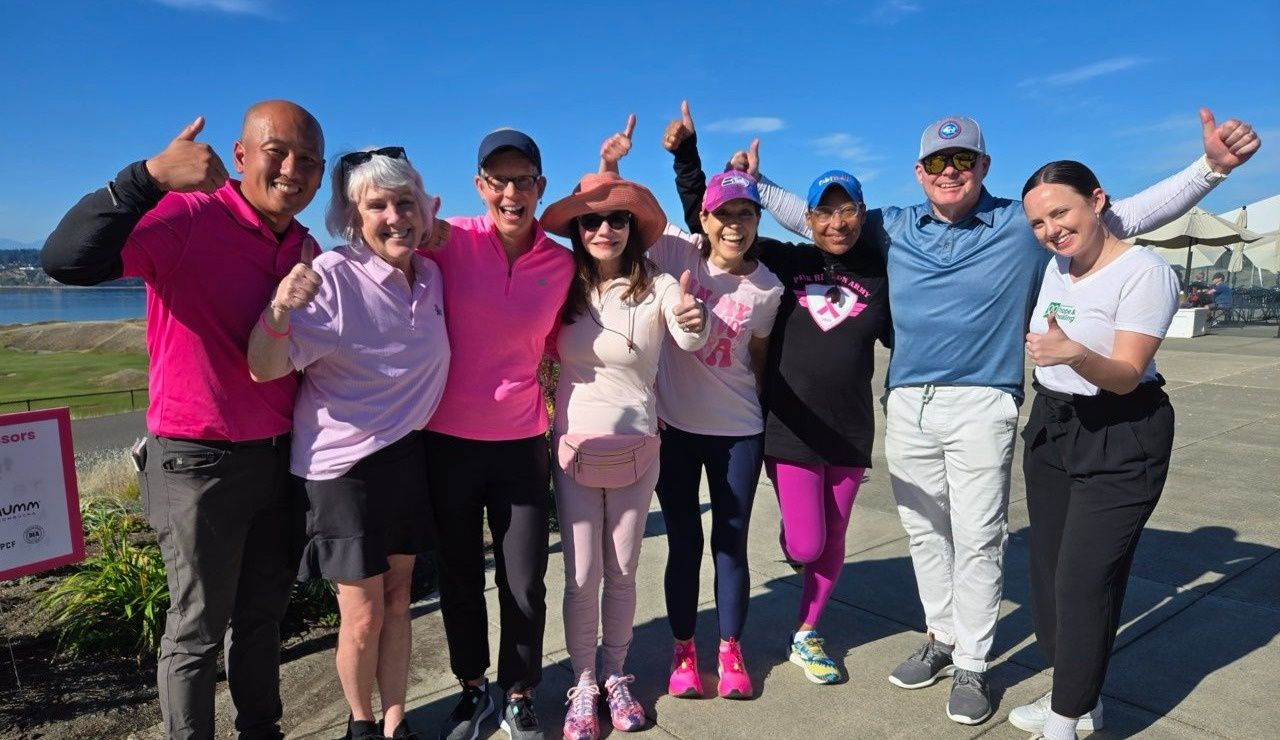
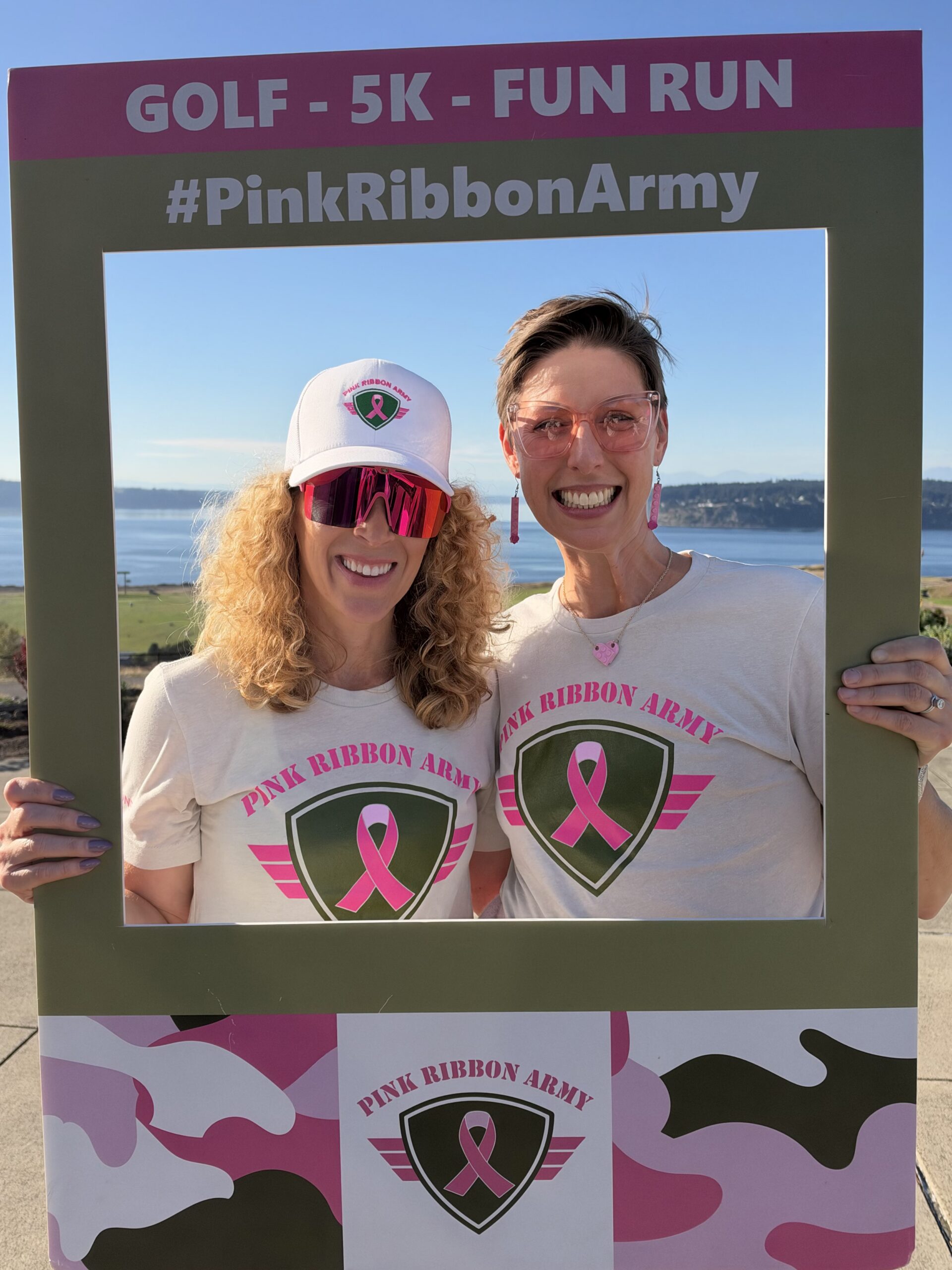
Transcript of Katie Joy Duke’s Keynote Speech at Pink Ribbon Army Golf Tournament, 5k, & 1k on October 4, 2026 at Chamber’s Bay Golf Course.
“Good afternoon, everyone. It really is an honor to be standing here with all of you this afternoon.
I’ve had the privilege of speaking at and participating in quite a few breast cancer community events over the last four years. And every time I step onto a stage, or like you, join in to raise my paddle, I’m reminded of something I embraced when I was first diagnosed:
We are not meant to do this alone.
Someone had looked at my situation and said, We’re going to help carry this. And that feeling matters. Because asking for help does not indicate weakness.
For many of us—especially if cancer is one of the first big traumas of our lives—our instinct is to try to maintain the person we were before our diagnosis. We keep working. Keep leading. Keep showing up for others. Keep looking put together. Keep being the mother, the wife, the professional, the friend, the go-getter everyone knows us to be.
There are women who go to chemotherapy in the morning and straight to work in the afternoon. Women who wear wigs made from their own hair, determined that no one will find out. Women who perform stridently all day long and then collapse into exhaustion when they finally get home.
I know because I tried being one of them. And let me tell you: it is tough. It is lonely. It is scary. And it is not necessary. I learned that lesson in a very literal way.
In 2022, I met Kelly and Danny Vo while modeling in the Life in Color annual gala event. I was four months into chemotherapy. I was bald. I had managed to hold on to an eyelash or two, maybe an eyebrow if I was lucky. And I was exhausted. I mean… exhausted.
As models, we were asked to line up and then we had to wait what felt like ages before it was my turn to walk. And I couldn’t stand. I had to ask for a chair. There I was—all dolled up. Fake eyelashes. Beautiful makeup. A gorgeous linen outfit. And sitting down because my body simply could not stand anymore.
I remember how vulnerable I felt as I chatted with none other than Kelly Vo in line. She understood something at the heart of why we are all gathered today. She understood that a cancer diagnosis is hard enough without having to worry about whether you can afford your groceries. Or your rent. Or your utilities. Or transportation to treatment. Or the hundred other things that become terrifying when you’re already scared to death.
Like Kelly, my diagnosis sucked, but I was in a fortunate place when it came to support systems and financial stability. It was very obvious that not everyone with cancer had those same advantages. Let me say this, cancer should not be harder simply because you have less money. And that truth is where the Pink Ribbon Army was born.
Out of courage. Out of compassion. Community and hope. Those aren’t just beautiful words. They are values put into action.
Everyone in this room is here for a different reason. Some of you have been through cancer yourself. Some of you are here because someone you love has been through it. Some of you are loving someone through treatment right now. And some of you are here because you know someone who didn’t make it.
But I think we all understand something: Cancer doesn’t just affect a body. It affects a family. It affects a career. It affects finances. It affects identity. It affects the way you see yourself and the way you move through the world. And sometimes, what a person needs most isn’t another piece of medical information. Sometimes she needs someone to say: I’ve got you. You don’t have to do this alone. Let me make dinner. Let me drive you to treatment. Let me watch your kids. Let me sit with you. Let me help. And that is what I hear in the mission of the Pink Ribbon Army.
It’s the belief that we can mobilize around people when they need us most. That we can advocate. That we can serve. That we can help people find resilience. And today, your generosity becomes part of that circle of support.
Because your dollars transmute. They become a Healing Box that a woman receives during treatment. She opens it. And maybe, for the first time all week, she stops. She lets herself breathe. Maybe she cries. Maybe she touches all the beautiful, thoughtful things that someone chose for her and realizes: Someone thought about me. Someone cares about me.
I’m not alone.
Your dollars become a $1,000 grant that helps a woman buy groceries or pay a bill or cover one of the countless expenses that suddenly feel overwhelming when you’re in cancer treatment. I know this one personally. In 2022, I received a grant from Northwest Hope and Healing worth $500 of grocery certificates for QFC and Safeway. And let me tell you—that felt like a shopping spree.
But more than that, it was one less thing my family had to worry about. Someone had looked at my situation and said, We’re going to help carry this. And that feeling matters. Because asking for help does not indicate weakness. Asking for help is an act of strength. I know that now.
Four and a half years after my diagnosis, I can say something I never could have imagined: Cancer has given me much more than it has taken away. Cancer has given me this community, extraordinary new friends. It has given me opportunities to serve, to inspire, to hold hands, to shed tears, to make meals, to show up.
It has given me the opportunity to accept myself more fully—not as some perfectly polished version of myself, but as the beautiful, imperfect, fallible, vulnerable human being that I am.
And maybe that’s one of the gifts we can give each other today. The reminder that none of us has to be invincible. None of us has to have it all together. None of us has to do it alone.
So when you raise your paddle, I invite you to think beyond the number. Think about the woman on the other side of your generosity. Think about the ripple. Your gift becomes food. It becomes rest. It becomes comfort. It becomes dignity. It becomes a moment of being cared for. It becomes the feeling of knowing: I am not alone.
And when we create that kind of support for one another—when we refuse to accept a world where the quality of someone’s support depends on the size of her bank account—we are doing more than raising money. We are creating community. We are creating healing. And we are reminding every woman going through cancer: Your life matters. And we’ve got you.
Thank you.”