
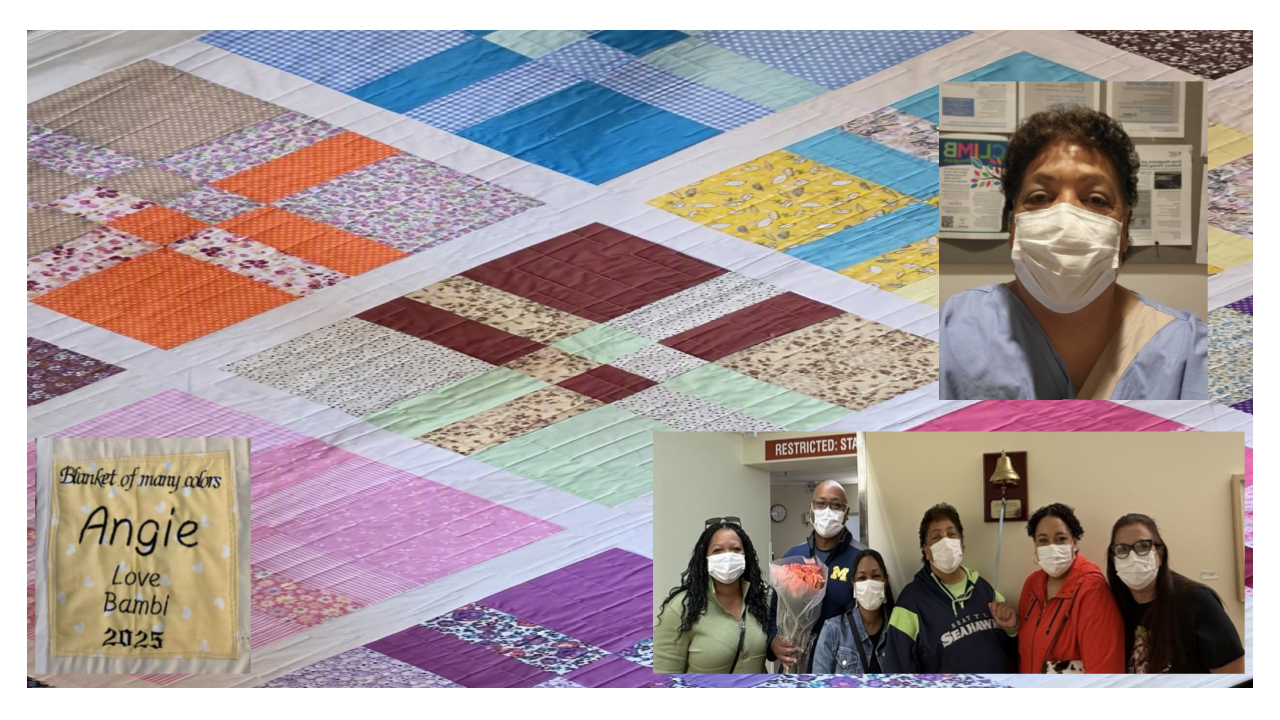
A Word of Guidance from Life in Color Model, Angie Stubblefield
“Cancer is a journey that forces you to travel with unpacked bags. No one feels fully prepared to hear the words, “You have cancer.” Yet almost immediately, you are expected to make decisions, learn a new vocabulary, trust people you have just met, and begin moving forward.
I often use the game Chutes and Ladders to explain what living with cancer is like.
The ladders are the things that move you forward: appointments, treatments, tests, asking questions, learning about your diagnosis, and following your care plan. Each step may seem small, but together they move you toward healing.
The chutes are the setbacks. They are complications, unexpected side effects, delays, infections, discouraging test results, and the simple bad luck that sometimes accompanies cancer. Some chutes are unavoidable. When they happen, your job is not to blame yourself. Your job is to recover, adapt, and begin climbing again.
Cancer often becomes a cycle of one appointment after another. It can feel like your life has been reduced to waiting rooms, blood draws, scans, and treatments. While this reactionary way of living is necessary, it should not define your entire experience.
Knowledge changes the journey.
Understanding what lies ahead — what procedures you will have, why they are necessary, what side effects you might experience, and how your healthcare team plans to manage complications — replaces some of the fear of the unknown with confidence. You cannot control every outcome, but you can understand the process.
You will also need grace.
Perhaps more than anything else, you will need to give yourself grace. There will be days when your body refuses to cooperate. There will be days when your emotions overwhelm you. There will be moments when fear, frustration, sadness, or anger seem impossible to escape. Those moments do not mean you are failing. They mean you are human.
Cancer will push you physically, emotionally, mentally, and spiritually. It will reveal strengths you did not know you possessed and expose vulnerabilities you never expected. The person who emerges from this experience will be different. That change is not simply something to survive — it can become part of your growth.
Throughout my own journey, I tried to live with gratitude, love, peace, joy, and hope. These became my compass whenever the path was uncertain. When I reached my physical or emotional breaking point, grace allowed me to release what I could not carry while continuing to move forward.
Keep a journal. Write honestly about your fears, victories, frustrations, questions, and hopes. Journaling helps you express what may otherwise remain trapped inside. It also gives you the opportunity to look back and recognize how far you have come and how your coping has evolved over time.
Walk — get outside, go somewhere particularly when you don’t want to — WALK EVERY DAY even if it is only a few minutes. Fresh air, movement, and nature can help restore both body and mind. Walking also helps to ease cancer’s hold on you. Tamoxifen comes with clotting potential — walking diminishes this potential.
Spend time with family and friends. Allow them to help you. Many people want to support you but don’t know how. Give them the opportunity. Accepting help is not a sign of weakness; it is one of the ways we allow others to express their love.
Survivorship does not mean the hard days are over. It means you have learned that you can walk through hard days and still find pieces of yourself along the way. There will be days that test you, days that exhaust you, and days that make you wonder if you have anything left to give. On those days, return to your compass: gratitude, love, peace, joy, and hope. Don’t let the hard days win.
Most importantly, remember this: cancer is part of your story, but it is not the whole story. One appointment, one treatment, one day at a time — keep climbing the ladders. You got this!”
Angie Stubblefield
July 20, 2026